
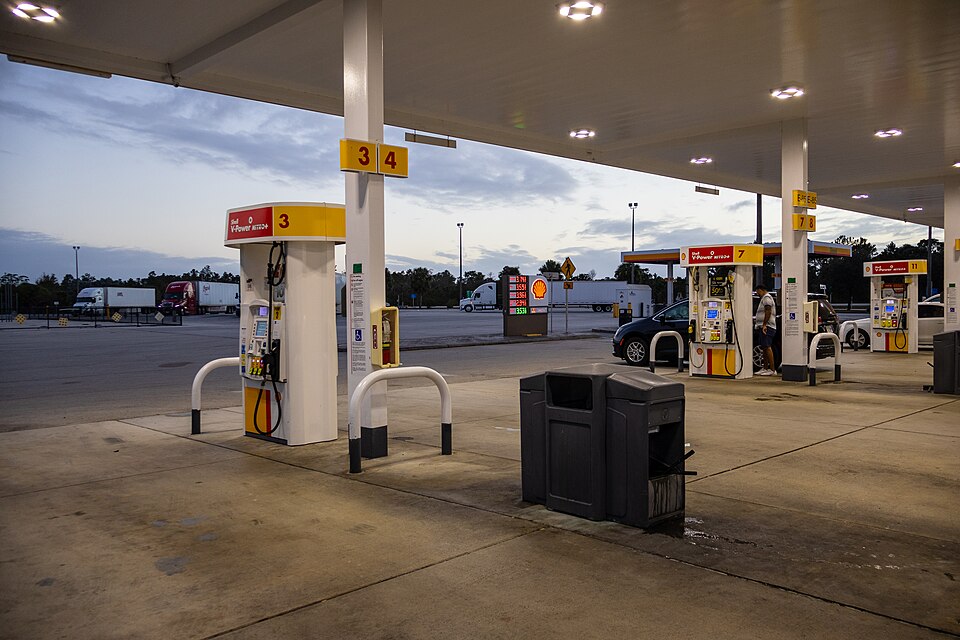
Brent crude closed Friday down approximately $9 per barrel on the Iran deal announcement. WTI crude followed. The mathematical pipeline from crude oil price to retail gasoline is established and predictable. With crude down ~$9/barrel from the Hormuz-closure high, American drivers should see approximately $0.28-0.38 per gallon reduction at the pump within 18-21 days — by approximately August 26-29, just before Labor Day. This is the single most politically important consumer metric in the next 30 days.
THE MATH — CRUDE TO PUMP
Crude oil is approximately 30-40% of the retail gasoline price. The rest is refining margin, distribution, taxes, and retail markup. A $9/barrel crude decline translates to approximately $0.21-0.27 in crude cost reduction per gallon, which after refining margin adjustment produces $0.28-0.38 at the pump. This math is standard petroleum economics — it is not speculative.
The timing: refineries that receive crude next week will begin producing lower-cost gasoline. That gasoline reaches wholesale distributors in 7-10 days. It reaches retail stations in 10-14 days. The $0.28-0.38 reduction will appear at the pump approximately 18-21 days after crude prices fell — which, from August 7, means August 25-28.
WHY LABOR DAY IS THE POLITICAL TARGET DATE
Labor Day (September 1) is both the traditional end of summer driving season and the traditional start of fall campaign season. If gas prices are visibly lower on Labor Day — specifically, if the price on the sign at the corner station is $0.25-0.40 lower than it was the week before the Iran deal — the political effect is powerful. The narrative writes itself: Trump made a deal, prices fell, you can see it at the pump.
For Democratic candidates, the counter-narrative is also available: “five months of avoidable war produced $X billion in excess consumer energy spending that a deal could have avoided.” Both narratives are factually supportable. Which one dominates Labor Day campaign messaging will depend significantly on how much credit Trump receives for the price reduction versus how much blame he receives for the five-month delay.
| CONFIDENCE: HIGH | Crude oil decline (~$9/barrel) is from market data on August 7. Crude-to-pump price pass-through mathematics is established petroleum economics knowledge (EIA and Dallas Fed documented). Labor Day political timing is editorial analysis. |
SOURCES
▸ Oil market data — Brent crude August 7 close
▸ EIA — crude-to-retail gasoline price transmission economics
▸ Dallas Fed — prior Iran war oil impact analysis (referenced in prior ONYX coverage)