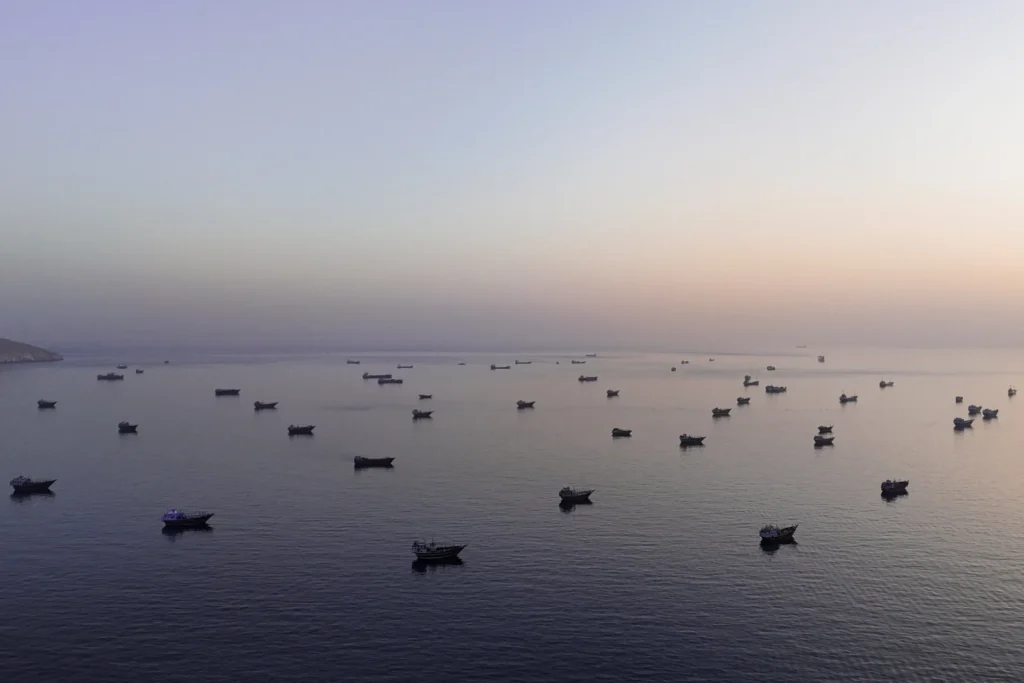
The Strait of Hormuz is the world’s most important single chokepoint for oil and gas shipping. Approximately 21 million barrels of oil pass through it per day under normal conditions — roughly 21% of global oil consumption. The specific countries whose oil must pass through Hormuz are Saudi Arabia, the UAE, Kuwait, Iraq, and Iran itself. All five depend on Hormuz for the vast majority of their oil export revenue.
WHY ANY ANNOUNCEMENT MOVES MARKETS IMMEDIATELY
Oil traders price the probability of Hormuz reopening or closing on a continuous basis. The market’s documented responses in the arc:
▸ September 18 deal announcement: oil fell $13 immediately, from above $100 to $87
▸ September 28 stalemate: oil rose 2%+ immediately
▸ September 29-30 Qatar channel exchange: oil monitoring the diplomatic progress
Any official announcement from Washington, Tehran, or Qatar on the sequence dispute resolution would produce an immediate market response. An announcement that the sequence problem is solved would send oil below $87 on anticipation of Hormuz reopening. An announcement that talks have collapsed would send oil above $90 immediately. The market is priced on diplomatic probability, and that probability is in real-time motion.
WHAT 21 MILLION BARRELS PER DAY MEANS
21 million barrels per day at the current elevated price is approximately $1.8-2 billion in daily oil revenue flowing through a single strait. The seven-month disruption to Hormuz transit has not eliminated all traffic — ONYX documented on September 28 that Qatar-linked LNG reportedly continued through the strait. But the disruption to commercial tanker traffic and the chilling effect on shipping insurance have produced the price elevation the arc has documented.
THE SIX-DAY MARKET WINDOW
Six days to October 6. The oil market is pricing the probability that the sequence problem is resolved before then. Every diplomatic development in the Qatar channel is simultaneously a market-moving event. When Araghchi confirms Iran’s counter-response, oil will move. When Washington responds to that counter-response, oil will move. The market and the diplomacy are on the same six-day clock.
21 million barrels a day pass through the Strait of Hormuz in normal times. The market prices the probability that they’ll be able to pass again in six days. Every diplomatic development moves the price. The sequence dispute is now confirmed: who goes first. The answer to that question is the most important single economic variable in the world right now. It will be answered, one way or another, by October 6.
WHAT HAPPENS NEXT
▸ Iran counter-response through Qatar — immediate market response
▸ Washington’s answer to the counter-response — immediate market response
▸ October 6 — 6 days; the deadline itself will produce a market response regardless of outcome
| CONFIDENCE: HIGH | Hormuz center international diplomacy disruptions threaten oil supplies, shipping inflation worldwide; any official announcement from Washington, Tehran, or Qatar immediately affects energy markets, according to confirmed reporting. |
SOURCES
▸ Confirmed reporting — Hormuz diplomacy sanctions oil October 6 September 30, 2026