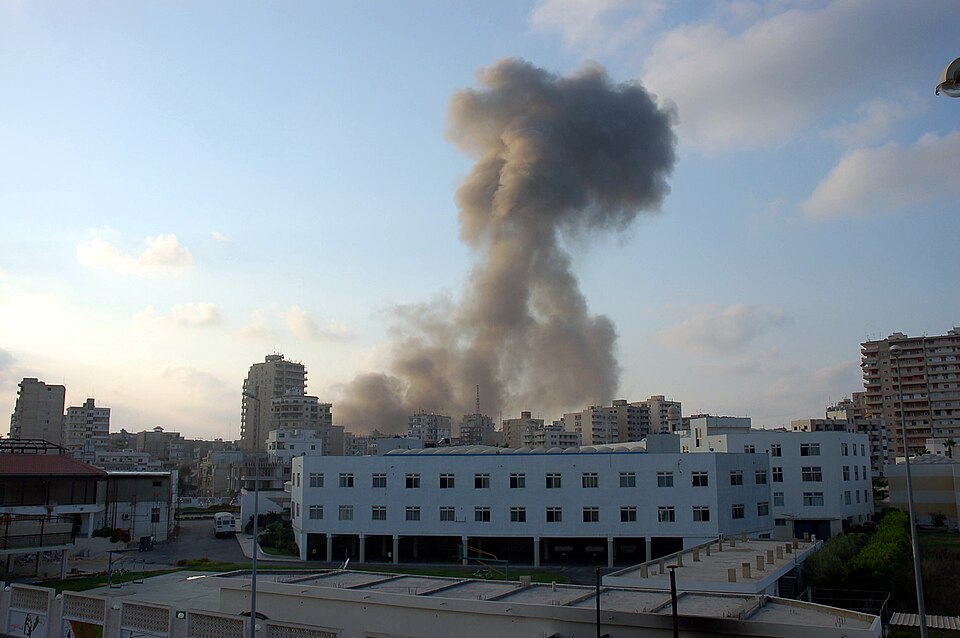
Soil scientist Talal Darwish, who has conducted extensive soil health mapping across Lebanon, collected samples at airstrike sites in southern Lebanon and found contamination that is categorically different from anything he has documented before: high levels of heavy metals, the herbicide glyphosate, and white phosphorus. According to Darwish and his colleagues, the contamination has poisoned agricultural land and destroyed ecosystems that will take generations to recover. This is the environmental dimension of the Lebanon war that receives almost no coverage in reporting focused on casualty counts and political negotiations.
2-MINUTE CONTEXT — SOUTHERN LEBANON’S AGRICULTURAL IMPORTANCE
Southern Lebanon is one of the most agriculturally productive regions in a country that has historically been a Mediterranean agricultural landscape. The region’s orchards, olive groves, tobacco fields, and vegetable farms have been the economic foundation of many communities for generations. The same area that has been the primary theater of military conflict between Israel and Hezbollah since 1978 is also a living agricultural landscape that farmers depend on for their livelihoods and food security.
Talal Darwish is a soil scientist with established prior research on Lebanese soil health — meaning his contamination findings are not a first-time observation but a comparison against a baseline he already knows. When he says the contamination is ‘distinct and more severe’ than anything he has documented previously, he is comparing it to his own prior data, not to an abstract standard.
THE THREE CONTAMINANTS — WHAT EACH MEANS
Heavy metals: military operations introduce heavy metals into soil through munitions casings, propellants, and the high-temperature combustion products of explosives. Lead, tungsten, antimony, and copper are documented military contamination metals. At high concentrations, they are toxic to crops, livestock, and humans through the food chain. They do not biodegrade — they persist in soil for decades.
Glyphosate: the most widely used herbicide in the world (Roundup). Its presence at airstrike sites in southern Lebanon is more puzzling than the heavy metals, since glyphosate is not a standard military munition component. Its presence could reflect: pre-existing agricultural use that became concentrated through soil disruption; deliberate use to destroy agricultural capacity; or contamination from a munition or supply chain source. The specific pathway requires additional investigation.
White phosphorus: a substance with documented military history in Lebanon specifically. White phosphorus burns at approximately 820°C and ignites on contact with oxygen, making it extremely difficult to extinguish. It has been used by multiple parties in Lebanon conflicts as a smoke screening agent and, controversially, in populated areas. In soil, white phosphorus leaves toxic residue that affects plant growth and can enter the food chain. The Human Rights Watch and Amnesty International have documented white phosphorus use in southern Lebanon; Darwish’s soil samples provide ground-level environmental documentation of the consequences.
Darwish has mapped Lebanese soil for decades. He has never found contamination like this. That specific statement — from a scientist who knows the baseline — is the article’s most important sentence.
THE LEGAL DIMENSION — WHITE PHOSPHORUS AND INTERNATIONAL LAW
White phosphorus use in populated areas is one of the most legally scrutinized military practices under international humanitarian law. Protocol III of the Convention on Certain Conventional Weapons (CCW) restricts the use of incendiary weapons against civilians in populated areas. Neither Israel nor the US is a party to Protocol III, but the use of white phosphorus in ways that affect civilian populations and civilian infrastructure — including agricultural land — is subject to customary international humanitarian law standards.
The confirmed presence of white phosphorus in southern Lebanese soil is not just an environmental finding. It is a legal evidence point that could inform the accountability cases being pursued against parties to the Lebanon war — including the Michigan class-action lawsuit documented in ONYX August 14 Section B Story 13. Environmental soil contamination from white phosphorus creates a documented record of where it was deployed and at what concentration.
WHAT HAPPENS NEXT
▸ Darwish and colleagues will publish their findings — peer-reviewed scientific documentation of the contamination will be the foundation for legal and remediation claims
▸ Remediation assessment — determining what remediation is possible and at what cost is the next phase of the environmental response
▸ Agricultural community impact — farmers who cannot use contaminated land face economic loss; documentation supports compensation claims
▸ Legal proceedings — the Michigan lawsuit and any future accountability proceedings will be able to reference Darwish’s soil contamination findings
▸ Long-term monitoring — ‘generations to recover’ means the contamination will need to be tracked over decades
| CONFIDENCE: HIGH | Talal Darwish’s findings (heavy metals, glyphosate, white phosphorus at airstrike sites) are from NPR reporting. Darwish’s prior baseline research is from NPR’s characterization of his established expertise. White phosphorus legal framework (Protocol III, CCW) is from established international humanitarian law. Michigan lawsuit connection is from ONYX August 14 Section B Story 13. |
| ⚖️ BIAS CHECK — WHO IS SAYING WHAT | |
| Darwish and research colleagues | Scientific credibility; the findings are from direct measurement not inference; the comparison to prior baseline is a significant credibility factor |
| NPR | Accountability journalism bringing environmental damage to coverage that is otherwise dominated by military and political framing |
| Israeli government | Has not responded specifically to Darwish’s findings in available reporting; has in the past contested characterizations of white phosphorus use in Lebanon |
| Lebanese communities | Most directly affected; the agricultural damage is their economic and food security loss |
| International legal community | Will use Darwish’s findings as evidence in accountability proceedings |
SOURCES
▸ NPR — Talal Darwish soil contamination findings, southern Lebanon, August 2026
▸ Protocol III, Convention on Certain Conventional Weapons — international humanitarian law on incendiary weapons
▸ ONYX August 14 Section B Story 13 — Michigan lawsuit connection
Q: Can the contaminated land be remediated?
A: Some types of heavy metal contamination can be partially addressed through phytoremediation (using specific plants to absorb metals from soil) or soil replacement. White phosphorus can be neutralized through specific chemical treatments but at significant cost. “Generations to recover” reflects that natural processes alone are insufficient and remediation at the scale of southern Lebanon’s agricultural land would require enormous resources.
Q: Is glyphosate typically found in military contamination?
A: No — it is atypical, which is specifically why Darwish’s finding raises questions. Standard military contamination involves metals and explosive residue. Glyphosate’s presence at airstrike sites requires a specific explanation that the available reporting does not yet provide.