A Hamburg court opened proceedings against a Ukrainian citizen accused of involvement in the 2022 Nord Stream pipeline explosions. The case is the first criminal trial arising from the destruction of the undersea natural gas pipelines connecting Russia to Germany — an act of sabotage that reshaped European energy infrastructure, accelerated the continent’s energy transition, and has never been conclusively attributed to any government.
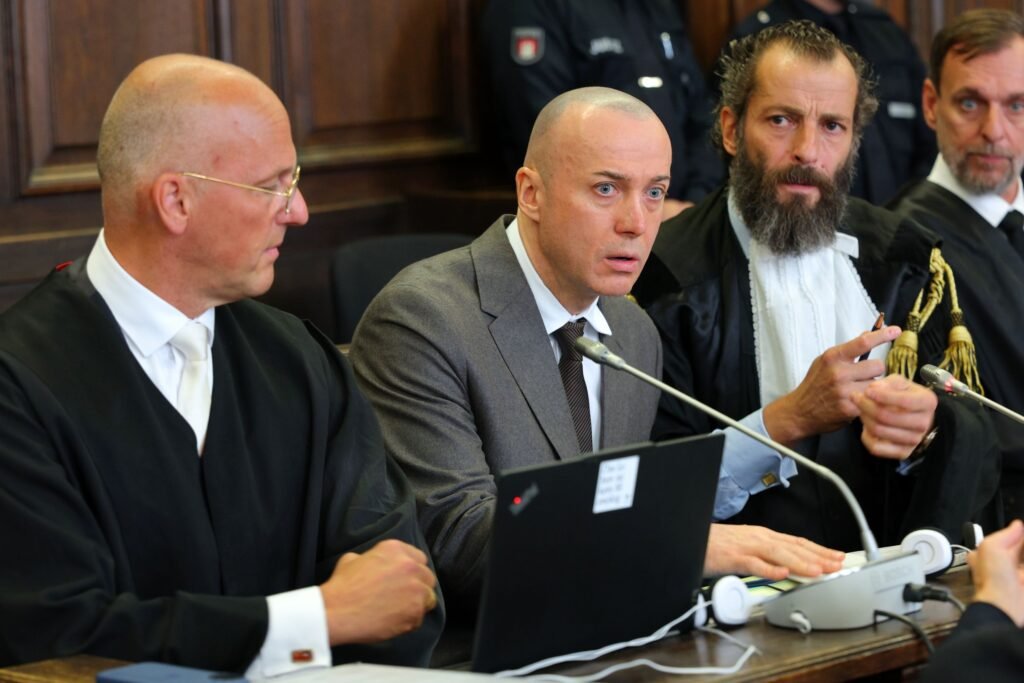
⚖️ HAMBURG, GERMANY · OCTOBER 14, 2026 · NORD STREAM TRIAL OPENS
A Hamburg court opened the first criminal trial connected to the September 2022 Nord Stream pipeline explosions. AP and DW confirmed the proceedings. The defendant is a Ukrainian citizen whose specific identity was not fully detailed in initial reporting but whom German prosecutors charge with being involved in the operation that destroyed the Nord Stream 1 and Nord Stream 2 pipelines in the Baltic Sea. Four years after the most consequential act of underwater infrastructure sabotage in European history, a criminal proceeding has begun. The defendant will face the German criminal justice system. The broader question — who directed the operation and at what level of state involvement — may or may not be answered in that proceeding.
The Nord Stream explosions, on September 26, 2022, destroyed three of the four strings of the twin undersea pipeline system that had been the primary conduit for Russian natural gas to Germany and through Germany to Western Europe. The explosions were sophisticated: they required detailed knowledge of the pipeline routes, the ability to deploy underwater cutting charges at significant depth in a busy shipping lane, and the operational security to execute the mission without detection. Multiple governments conducted investigations. Germany, Sweden, and Denmark all opened formal inquiries. Sweden closed its investigation in 2024 without reaching a public conclusion. Germany and Denmark have continued. The Hamburg criminal case is the first to produce a defendant.
WHAT THE INVESTIGATION PRODUCED
German investigators developed the case against the Ukrainian defendant through standard criminal investigation tools: telecommunications intercepts, financial records, witness accounts, and physical evidence. The charging document describes the defendant as part of an operational cell that conducted the physical sabotage. It does not, in available reporting, name the government or organization that directed the operation, financed it, or chose the target. That is the question that the criminal trial of one individual involved in the physical execution cannot fully answer — and it is the question that has never been publicly answered by any government investigation.
The leading public theories about Nord Stream responsibility have included Ukraine-aligned actors operating with or without Ukrainian state direction, Russian sabotage of its own pipeline for political leverage, and Western actors. Pulitzer Prize-winning journalist Seymour Hersh published reporting attributing the operation to the United States with Norwegian assistance; the US and Norway denied it. German reporting has pointed toward a sailing yacht linked to a Ukrainian network. The Hamburg proceeding will examine the evidence against this defendant. Whether it produces a definitive answer to the broader attribution question depends on what testimony and evidence the court record develops.
THE GEOPOLITICAL CONTEXT TODAY
The Nord Stream trial opens in a news environment where Russia and Ukraine are in an active war, where the United States is pursuing a ceasefire framework that Ukraine is resisting, and where Germany is managing its relationship with both Washington and Kyiv in the context of significant energy policy changes triggered in part by the pipeline destruction. Nord Stream is gone. Germany built replacement infrastructure and accelerated its LNG import capacity. The energy dependency on Russia that Nord Stream represented has been structurally broken. The trial will adjudicate responsibility for an act that changed European energy history — in a court, in Hamburg, four years after the explosions.
“The Nord Stream trial opened Tuesday in Hamburg. A Ukrainian citizen is on trial. The pipelines are gone. Europe rebuilt its energy infrastructure. Four years of investigations have never publicly named who gave the order. Now there is a courtroom.”
WHAT HAPPENS NEXT
► Trial proceedings — evidence presentation, witness schedule, defendant plea
► Attribution development — whether testimony in the Hamburg case addresses who directed the operation
► German investigation — whether federal prosecutors expand the case beyond the current defendant
► Political reaction — Russian, Ukrainian, and American response to the trial opening
► Historical record — whether the Hamburg proceeding produces the most definitive public account of the Nord Stream operation
| CONFIDENCE: HIGH | AP and DW confirmed the Hamburg court opened a Nord Stream sabotage trial against a Ukrainian citizen defendant on October 14, 2026. Investigative background characterized from documented public record. |
| BIAS CHECK | ASSESSMENT |
| Source weight | AP, DW via Wikipedia current events — AP is wire primary; DW is strong for German legal proceedings |
| Attribution | No government attribution stated as fact; theories characterized as publicly reported theories with sourcing noted |
| Hersh reporting | Described as existing public reporting; denied by the US and Norway noted alongside |
| Ukraine framing | Defendant Ukrainian nationality noted; Ukrainian state direction characterized as not established in available charging documents |
SOURCES
► AP — Nord Stream sabotage trial opens in Hamburg, Ukrainian defendant, October 14, 2026
► DW via Wikipedia current events — Hamburg court Nord Stream criminal trial, October 14, 2026