The plans include mandatory incident reporting for high-risk AI deployments, independent safety evaluations, and a new regulatory body; Australia joins the UK and EU in developing a formal AI governance framework.
ARTIFICIAL INTELLIGENCE · AUSTRALIA · REGULATION · POLICY
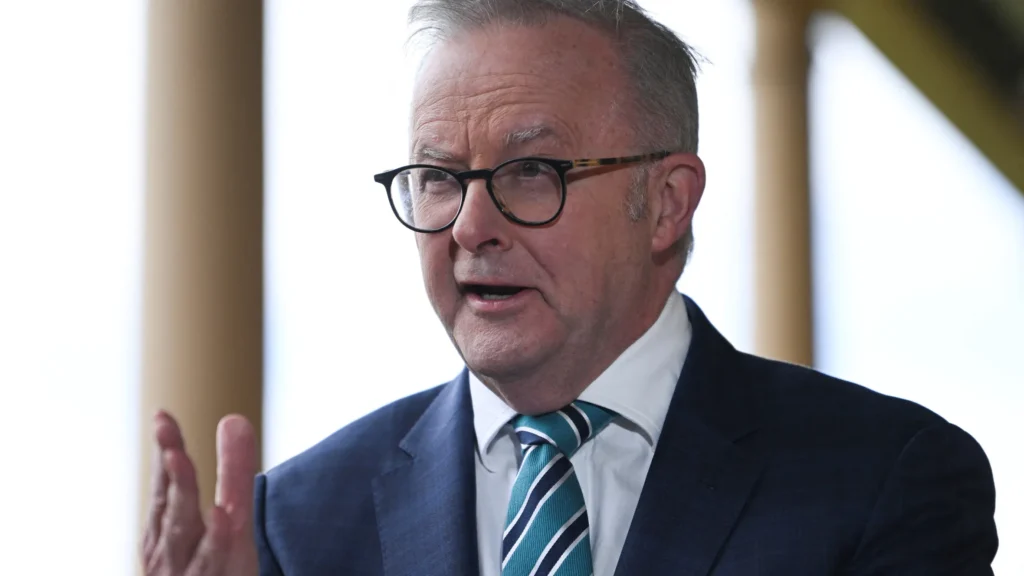
Australian Prime Minister Anthony Albanese announced a package of mandatory AI safeguards that will apply to high-risk AI deployments in Australia, including requirements for incident reporting, independent safety evaluations, and the establishment of a new AI safety regulatory body, AFP and Wikipedia current events reporting confirmed on Monday. The announcement positions Australia alongside the United Kingdom and the European Union as governments that have moved from voluntary AI safety frameworks toward mandatory regulatory requirements, and it comes in the context of the broader international AI governance debate that includes the new Democratic congressional majority in the United States developing its own AI oversight agenda.
AFP reporting on the Albanese announcement detailed the three main components of the mandatory safeguard package. The incident reporting requirement would obligate operators of high-risk AI systems to report safety incidents — defined as cases where the AI system behaved in ways that caused or could have caused significant harm — to the new regulatory body within a specified timeframe. The independent safety evaluation requirement would mandate pre-deployment evaluations of high-risk AI systems by third-party assessors who meet accreditation standards established by the new body. The new regulatory body itself would have enforcement authority to investigate incidents, issue compliance orders, and impose financial penalties on operators who fail to meet the mandatory requirements.
What Counts as High-Risk
Wikipedia’s current events reporting provided additional detail on the Australian government definition of high-risk AI, noting that the Albanese announcement used a risk-based categorization approach similar to the EU AI Act. High-risk categories in the Australian framework include AI systems used in medical diagnosis and treatment, criminal justice applications including recidivism prediction and facial recognition for law enforcement, employment screening and hiring decisions, critical infrastructure management, and financial services including credit assessment. The categorization specifically excludes AI systems used purely for entertainment or non-consequential applications, focusing regulatory attention on deployments where AI decisions affect fundamental rights or safety.
AFP noted that the Australian technology industry had been consulted in the development of the safeguard package and that the response was mixed: larger technology companies with established safety teams generally supported the framework as one that creates regulatory clarity and competitive advantage for responsible operators, while smaller AI developers expressed concern about compliance costs for mandatory evaluation requirements that could disproportionately burden smaller entrants.
“Australia will be a leader in responsible AI. The benefits of artificial intelligence must be matched with the safeguards Australians deserve.” — Prime Minister Albanese, announcement statement cited by AFP
The International Governance Context
The Albanese announcement adds Australia to a growing list of governments implementing mandatory AI governance frameworks. The EU AI Act entered into force in 2024 and is progressively applying its requirements. The UK developed a voluntary framework under the previous government, but the Labour government has signaled interest in moving toward mandatory requirements. The United States under the Biden administration issued executive orders on AI safety, and the incoming Democratic congressional majority has signaled legislative interest in formal AI oversight. Australia joining this trend through parliamentary legislation rather than executive action gives the framework greater durability and democratic legitimacy.
WHAT HAPPENS NEXT
► Australian parliament to introduce enabling legislation for the mandatory safeguard package
► New AI safety regulatory body to be established with initial budget and staffing allocation
► Industry consultation to continue on specific incident reporting timelines and evaluation standards
► Australia framework to be assessed for compatibility with EU AI Act for trade-partner alignment
| CONFIDENCE: MODERATE | AFP and Wikipedia current events both confirmed the Albanese announcement and the three main components. Two-source confirmation of a policy announcement; MODERATE reflects that implementation legislation has not yet been introduced and Wikipedia current events is a secondary aggregator. |
| Bias Check | ||
| Left-Lean | Center | Right-Lean |
| Safeguards framed as essential protection from corporate AI deployment that prioritizes profit over safety. | Reports announcement components and international governance context factually; notes industry response. | Safeguards framed with concern about regulatory burden on innovation; voluntary frameworks preferred. |
SOURCES
► AFP — Australian PM Albanese mandatory AI safeguards announcement, incident reporting, evaluation, regulatory body, November 10, 2026
► Wikipedia current events — Announcement confirmation, high-risk category detail, international context