New footage and updated reporting indicate dozens were killed in a sinking off the Senegalese coast; the revised toll makes this one of the deadliest Atlantic crossing incidents of the year.
MIGRATION · SENEGAL · HUMANITARIAN · ATLANTIC CROSSING
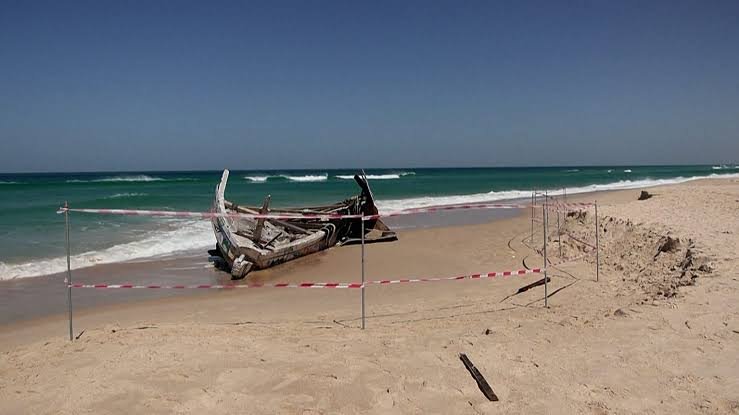
Wreckage from a migrant boat off the coast of Senegal has been reported with an updated and higher death toll than initially confirmed, with new footage and reporting indicating dozens killed in the sinking, Euronews reported on Monday. The incident is among the deadliest Atlantic crossing attempts of 2026, adding to a grim annual toll on the West African-to-Canary Islands route that has seen hundreds of deaths in the current year. The specific vessel involved and the precise departure point along the Senegalese coast were still being confirmed as of Monday reporting, but the emergence of wreckage and updated casualty figures indicates the original incident was significantly more deadly than first reported.
The Atlantic crossing route from Senegal and other West African countries toward the Spanish Canary Islands has become one of the most dangerous migration corridors in the world. The journey involves open-ocean crossings of hundreds of kilometers in vessels — typically wooden pirogues or repurposed fishing boats — that are not designed for open-sea voyages and that frequently carry far more passengers than their capacity was intended for. Euronews noted that the Senegal-to-Canaries route has seen a significant increase in traffic over the past three years as enforcement on the more direct Mediterranean routes from Libya and Tunisia has tightened, pushing migration toward the longer and more dangerous Atlantic alternative.
The Atlantic Route Context
Euronews provided context on the structural dynamics driving the Atlantic crossing attempt. Senegal has experienced a combination of economic pressures, including a contraction in the artisanal fishing sector from which many of the migrants are drawn, climate-related agricultural disruption in interior regions, and limited formal employment opportunities for young people in the age cohort most represented among those attempting the crossing. The specific dynamic in which fishing communities contribute disproportionately to migration attempts on routes that use fishing vessels reflects the intersection of economic displacement and the specific knowledge of maritime navigation that fishing communities possess.
The Spanish government and the European Union have invested significantly in deterrence and rescue capacity on the Atlantic route, including increased aerial surveillance, coast guard patrol vessels, and cooperation agreements with Mauritanian and Senegalese authorities to intercept vessels before they reach open water. The persistence and scale of the crossings despite these measures reflect the degree to which the economic and security conditions driving migration outweigh the deterrence effect of the increased enforcement presence.
“Every wreckage report off this coast is a community in Senegal that has lost fathers, sons, and brothers. The death toll of the crossing is a failure of policy, not a natural disaster.” — Migration advocacy statement cited by Euronews
The Canaries Arrival Context
The Canary Islands have been the primary receiving point for Atlantic route migrants and have experienced significant pressure on their reception and processing capacity. Euronews noted that the islands have repeatedly declared humanitarian emergencies related to migrant arrivals and that the Spanish government has sought but not fully obtained EU-level burden-sharing for the reception and processing costs. The updated death toll from the Senegal wreckage adds to the political pressure on the EU to develop a more comprehensive response to the Atlantic route that addresses both the deterrence and the reception dimensions.
WHAT HAPPENS NEXT
► Senegalese coast guard and Spanish maritime authorities to continue wreckage and survivor search
► EU migration policy debate to reference updated Senegal toll in ongoing burden-sharing negotiations
► Victim identification process to begin with available wreckage and survivor testimony
► Spanish Canary Islands reception capacity review to address updated Atlantic route death toll
| CONFIDENCE: MODERATE | Euronews confirmed the wreckage report and updated higher death toll. Single-source reporting on a migration incident; MODERATE reflects that the precise final death toll and vessel identification were still developing as of Monday reporting. |
| Bias Check | ||
| Left-Lean | Center | Right-Lean |
| Deaths framed as direct consequence of EU deterrence policies that push migrants to deadlier routes. | Reports updated toll, Atlantic route context, and structural migration dynamics factually. | Deaths framed as consequence of people-smuggling networks; calls for stronger departure-country enforcement. |
SOURCES
► Euronews — Senegal migrant boat wreckage, updated higher death toll, Atlantic crossing context, November 10, 2026