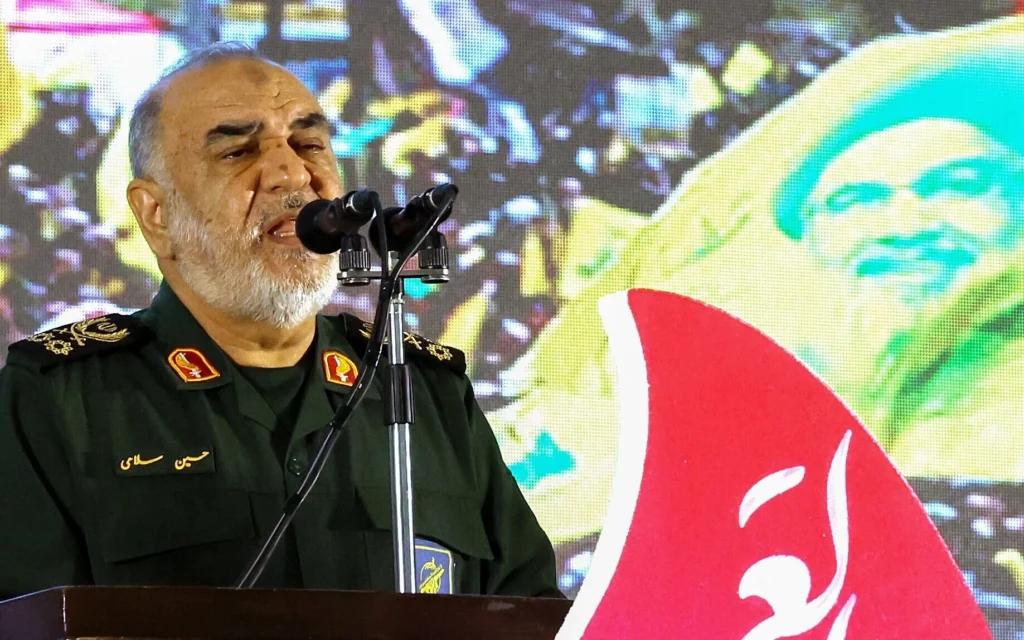
The USS Theodore Roosevelt carrier strike group has arrived in the Middle East theater, bringing to three the number of American aircraft carriers deployed in the region as diplomatic efforts with Iran remain at an impasse.

IRAN ARC · USS THEODORE ROOSEVELT · THREE CARRIERS · MIDDLE EAST · MILITARY POSTURE · IRAN TALKS
The USS Theodore Roosevelt carrier strike group arrived in the Middle East theater, bringing to three the number of American aircraft carriers deployed in the region simultaneously, NPR confirmed on Monday, in a significant military posture escalation that runs in parallel with the diplomatic dimension of the Iran arc (the dirty-bomb intelligence confirmed in Nov 17 A04, the Jordan condemnation of Nov 15 B13, the Hormuz tanker fires of Nov 15 A08, and the Bahrain drone intercept of Nov 15 A02) and that arrives at the specific moment when diplomatic efforts to stabilize the Iran confrontation have stalled. The deployment of three carriers simultaneously to the Middle East is an extraordinary concentration of American naval power — in peacetime the United States typically deploys one carrier to the region, with two carriers occasionally deployed during elevated tension periods — and signals a level of military readiness that goes beyond deterrence signaling into actual war-fighting positioning.
NPR provided context on the significance of three-carrier deployments in the history of American naval posture in the Middle East. The United States has deployed three carriers simultaneously to a single theater on a small number of occasions, all associated with either active conflict (the Persian Gulf War buildup of 1990-1991, the Iraq War of 2003) or extreme crisis escalation (the September 11 period). The November 17 three-carrier deployment therefore places the current Iran confrontation in the same category of military seriousness as those historical moments, regardless of whether the administration characterizes it as a deterrence deployment or a war-fighting posture. NPR noted that military analysts distinguish between a carrier deployment as a signal — intended to communicate to Iran the costs of further escalation — and a carrier deployment as a capability — intended to provide the actual air strike capacity to execute offensive operations if ordered.
The Stalled Talks Dimension
NPR analyzed the stalled Iran talks dimension that the carrier deployment arrives in. The administration has been pursuing a dual-track approach to the Iran confrontation — military posture escalation on one track, diplomatic engagement through intermediaries (Qatar, Oman, and potentially Turkey have served as back channels in various phases of US-Iran diplomacy) on the other — and the description of talks as stalled indicates that the diplomatic track has not produced the de-escalation or negotiated framework that would reduce the military posture requirement. NPR noted that the specific sticking points in the stalled talks have not been fully reported, but that the Iran arc escalation sequence — from the IRGC France operation through the Hormuz tanker fires to the dirty-bomb intelligence — has likely raised the American diplomatic demands beyond what Iran is currently willing to concede, producing the stalemate that the carrier deployment is designed to pressure.
NPR analyzed the Iran response options in the context of three American carriers in the theater. Iran military doctrine in a confrontation with American carrier groups is built around the specific geography of the Persian Gulf and Strait of Hormuz: the confined waters of the Gulf limit carrier maneuver space, and Iran has invested heavily in anti-ship missile systems (the Noor, Qader, and Khalij Fars families), fast-attack boat swarm tactics, and naval mine capabilities specifically designed to threaten carrier operations in the Gulf environment. Three carriers in the theater do not change the fundamental geometry of that confrontation, but it does increase the American strike capacity available for offensive operations and may change the IRGC assessment of the military balance. NPR noted that the IRGC response to three-carrier deployment will be a signal of its own about whether Iran is willing to de-escalate or is prepared to continue the confrontation at a higher level of military risk.
“Three carriers in the Middle East is not a message to Iran. It is a fleet. And a fleet has only one purpose: to be ready to fight.” — Naval analyst cited by NPR
The Shenzhen Diplomacy Connection
NPR connected the three-carrier deployment to the Shenzhen summit outcome. The Trump-Xi-Putin framework developed at Shenzhen was described in Nov 16 coverage as including an Iran dimension — the great-power framework is intended to address regional conflicts including the Iran confrontation — and the three-carrier deployment arriving in the week of the Shenzhen summit follow-on engagement raises the question of whether the military posture escalation is consistent with or in tension with the diplomatic framework being developed. If the Shenzhen summit produced an understanding that the Iran confrontation would be managed through diplomatic channels, a three-carrier deployment signals that the military track is continuing independently of the diplomatic track, which is either a deliberate pressure tactic or a signal of administration internal division about how to manage the Iran confrontation.
WHAT HAPPENS NEXT
► USS Theodore Roosevelt to assume operational posture in Middle East; carrier strike group to integrate with existing forces
► Iran to assess three-carrier deployment; IRGC response posture to be monitored
► Administration to clarify whether three-carrier deployment is deterrence or war-fighting posture
► Stalled talks to resume or formally collapse; diplomatic track status to be clarified by intermediaries
► Dirty-bomb intelligence to be assessed alongside carrier deployment for escalation calibration
| CONFIDENCE: HIGH | NPR confirmed the USS Theodore Roosevelt arrival in the Middle East theater, the three-carrier count, and the stalled talks context. Single public broadcaster on a confirmed naval deployment of extraordinary regional significance. |
| Bias Check | ||
| Left-Lean | Center | Right-Lean |
| Three carriers framed as reckless escalation that closes diplomatic space and risks war with Iran. | Reports carrier deployment, three-carrier significance, stalled talks, Iran military doctrine, and Shenzhen connection factually. | Three carriers framed as necessary deterrence; Iran must see overwhelming force to understand the cost of further escalation. |
SOURCES
► NPR — USS Theodore Roosevelt arrival, three-carrier context, stalled talks dimension, Iran military doctrine analysis, Shenzhen connection, November 17, 2026