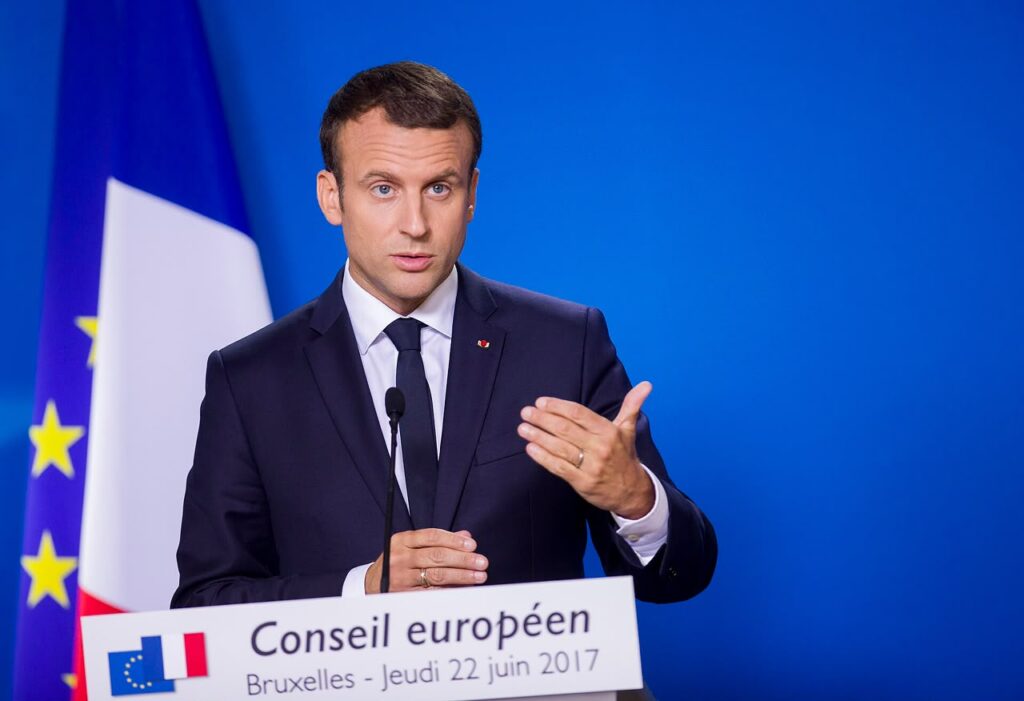
Britain and the European Union made further progress on the post-Brexit relationship reset, with concrete advances on trade arrangements and youth mobility that move closer to resolution of some of the most practically significant disputes of the post-Brexit period.
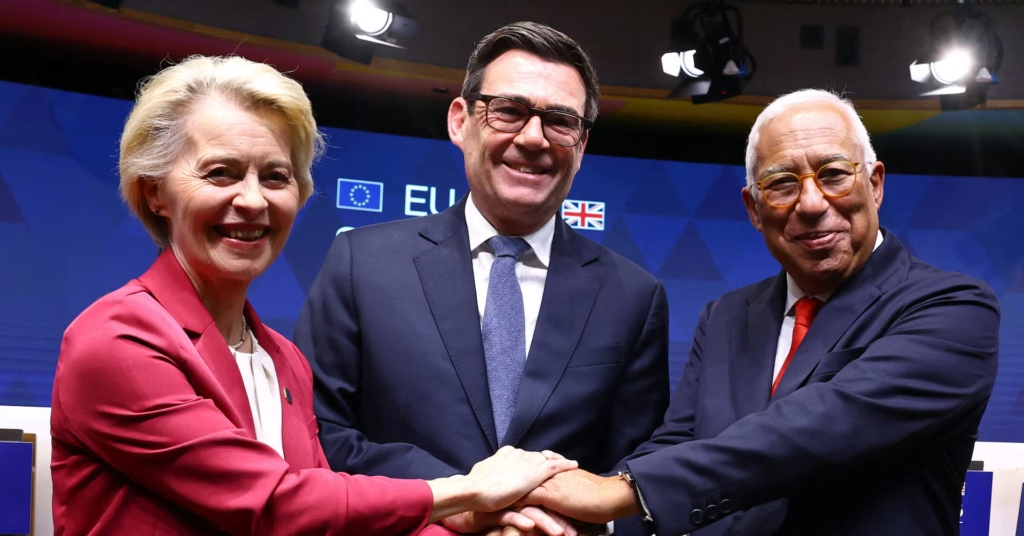
BREXIT RESET · UK-EU · TRADE · YOUTH MOBILITY · STARMER · ARC CONTINUATION
Britain and the European Union made further concrete progress on the post-Brexit relationship reset, with advances on trade arrangements and youth mobility that move closer to resolution of some of the most practically significant post-Brexit disputes, BBC, the Guardian, and the Washington Post confirmed on Friday. The November 21 progress is a continuation of the UK-EU summit story that ONYX reported on November 20 (Section A, A09), in which the first formal UK-EU summit since Brexit produced agreements on veterinary arrangements and defense cooperation while leaving youth mobility and fishing rights for further negotiation. The day-after reporting suggests that the negotiations that the summit launched continued productively into November 21, with specific advances on the youth mobility question that had been identified as one of the most politically sensitive remaining issues for both sides.
BBC and the Guardian provided detail on the youth mobility progress. The specific youth mobility advance represents a framework under which young British and EU citizens would be able to live and work in each other’s territory for a limited period — the specific age range, duration, and conditions of the scheme were the subject of negotiation, with the EU pushing for a more expansive scheme and the UK government concerned about the political optics of any arrangement that could be characterized as free movement. BBC noted that the specific compromise being developed involves a capped scheme with specific conditions that allow the UK government to characterize it as a targeted mobility arrangement rather than a return to free movement, addressing the political constraint that the Starmer government faces from the British right on any post-Brexit concession that resembles the pre-Brexit freedom of movement. The Guardian noted that youth mobility has been specifically important to the UK university sector, creative industries, and hospitality sector, all of which have faced significant labor and talent access challenges since Brexit.
The Trade Arrangements Dimension
The Washington Post and BBC analyzed the trade arrangements dimension of the November 21 progress. The veterinary agreement reached at the November 20 summit addressed food trade friction, and the November 21 progress adds further trade facilitation elements — the specific details of which were reported in general terms consistent with the information available from official communications — that reduce the customs and documentation burden on UK-EU trade in sectors that have been most affected by post-Brexit friction. The Washington Post noted that the trade progress is particularly significant for the UK manufacturing and services sectors that export to EU markets, and that the specific reduction in trade friction will be measured by business organizations over the coming months to assess whether the reset is delivering the practical economic benefits it promises.
BBC analyzed the domestic UK political dynamic around the Brexit reset progress. The Labour government of Prime Minister Starmer has consistently framed the reset as improving the UK-EU relationship without reversing the Brexit decision — the specific phrase used is resetting, not rejoining — and the youth mobility and trade advances need to be framed in terms that maintain that distinction. BBC noted that the British right has been monitoring the reset closely for any element that could be characterized as a step back toward EU membership, and that the specific framing of the youth mobility scheme as capped and conditional rather than open and reciprocal is designed to forestall that characterization. The Guardian noted that the Labour government base and many business groups are more enthusiastic about the reset than the political communication suggests, and that the government is managing a gap between what its supporters want and what it can say publicly.
“We are making progress. The relationship is improving. This is what pragmatic government looks like.” — Prime Minister Starmer, cited by the BBC
The American Dimension
The Washington Post analyzed the American dimension of the UK-EU reset progress. The U.S. government has consistently expressed support for a stable and productive UK-EU relationship, and the specific trade and mobility advances of November 21 are consistent with American strategic preferences for a European architecture in which the UK is functionally integrated with the EU security and economic space even if it is not formally a member. The Washington Post noted that the UK-EU reset progress occurs in the context of the NATO Poland crisis, which makes European cohesion and alliance unity more urgent than at any time since the Ukraine invasion began, and that the UK-EU relationship improvement is a contribution to European strategic coherence at a moment when it is most needed.
WHAT HAPPENS NEXT
► Youth mobility scheme to be finalized; specific age range, duration, and conditions to be settled
► Fishing rights negotiations to continue; the most politically contested remaining issue for both sides
► Trade facilitation measures to be implemented; business sector to monitor for practical friction reduction
► UK domestic political debate about the reset to continue; Conservative opposition to characterize terms
| CONFIDENCE: HIGH | BBC, the Guardian, and Washington Post all confirmed the November 21 progress on trade and youth mobility. Three-source confirmation across UK broadcast, UK liberal, and American premium on a confirmed diplomatic advance in the UK-EU reset arc. |
| Bias Check | ||
| Left-Lean | Center | Right-Lean |
| Reset framed as too slow and too limited; Starmer should pursue single market access and stop managing Brexit mythology at the cost of economic recovery. | Reports trade and youth mobility progress, UK political dynamic, American dimension, and arc continuation factually. | Reset framed as a betrayal creeping forward; every new deal with the EU is another step toward reversing the democratic Brexit decision. |
SOURCES
► BBC — Youth mobility progress, trade arrangements, Starmer quote, domestic political dynamic, November 21, 2026
► The Guardian — Youth mobility detail, university and creative sector significance, Labour government framing gap
► The Washington Post — Trade arrangements analysis, American strategic dimension, European cohesion context