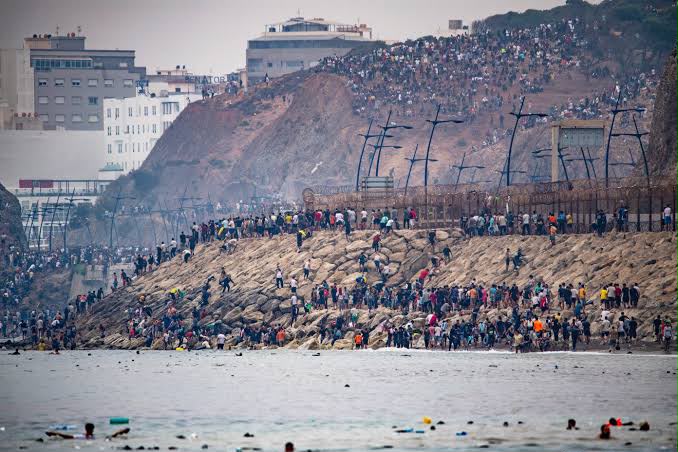
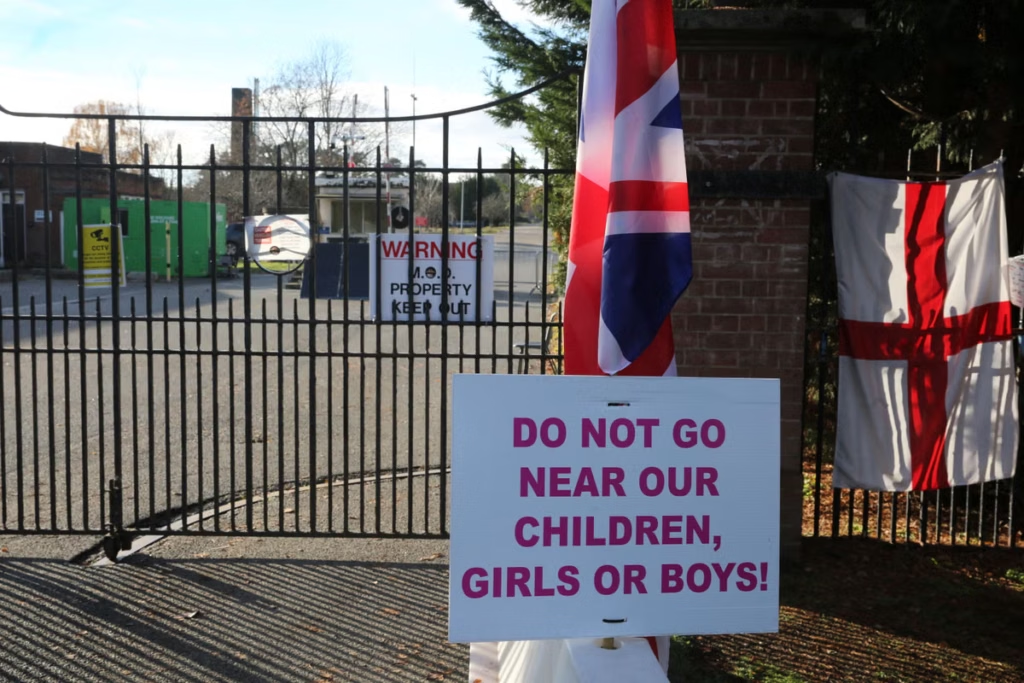
Residents of a Suffolk village have voted symbolically to leave the United Kingdom in protest over government plans to house asylum seekers in facilities near the village, in a local political gesture that The Guardian covered as an illustration of the tension between national immigration policy and local community resistance.
SUFFOLK · VILLAGE VOTE · LEAVE THE UK · ASYLUM SEEKERS · LOCAL PROTEST · IMMIGRATION · ENGLAND
Residents of a village in Suffolk — the rural English county in the East of England known for its agricultural landscape, historic market towns, and long coastline — have voted in a symbolic local meeting to leave the United Kingdom in protest over government plans to house asylum seekers in a facility near the village, a gesture that The Guardian covered as an illustration of the acute tension between national immigration policy and local community resistance in England, the newspaper reported on Saturday. The symbolic vote — which has no legal force, as individual villages in England have no mechanism for leaving the United Kingdom — is primarily a political statement: a formal expression of the depth of local opposition to the asylum seeker housing plans in a form that generates national media attention and communicates the intensity of the feeling to the government. The Guardian noted that the Suffolk village action follows a broader pattern of local protest against asylum seeker housing that has been a recurring feature of the English political landscape throughout the recent period of high asylum seeker arrivals.
The Guardian provided the specific context of the Suffolk village protest. The planned facility for asylum seekers — the specific form (a hotel, a former military base, a purpose-built facility) and scale of the planned housing — was the specific trigger for the village meeting and the symbolic vote. The Guardian noted that the opposition to asylum seeker housing in English villages and towns typically takes two forms: one focused on specific practical concerns (the scale of the facility, the capacity of local services, the planning process) and one focused on the broader immigration and asylum question (the level of asylum arrivals, the adequacy of the asylum determination process, the appropriateness of housing asylum seekers in rural communities). The Suffolk village protest reflects both dimensions, with the symbolic Leave the UK vote communicating the emotional intensity of the local feeling in a way that a formal planning objection would not.
The National Context
The Guardian analyzed the national context of the Suffolk protest. The housing of asylum seekers in hotels, former military bases, and purpose-built facilities has been one of the most contentious aspects of UK asylum policy for several years, and the specific geography of that housing — often in rural and coastal areas where property is cheaper, and facilities are available — has concentrated the local political impact of the asylum system in communities that are not typical locations for large-scale migration. The Guardian noted that the communities most affected by asylum seeker housing are often the same communities that voted most strongly for Brexit — the rural and coastal English towns and villages where the Leave vote was highest — and that the intersection of immigration policy with the Brexit cultural politics of these areas creates a specifically charged political dynamic. The symbolic Leave the UK vote in Suffolk resonates precisely because it invokes the Brexit metaphor: the village is saying it wants the same kind of exit from a relationship it did not choose that England voted for in 2016.
“If the government will not listen, we will make a noise they cannot ignore. That is what this vote is.” — Suffolk village resident cited by The Guardian
The Immigration Policy Dimension
The Guardian analyzed the immigration policy dimension of the Suffolk protest. The Labour government inherited a significant backlog in the asylum determination system and a continuing high level of asylum arrivals — primarily through the English Channel small boat crossing route — that has been a central political challenge. The government policy of distributing asylum seekers across England through dispersal housing arrangements is a consequence of the volume of arrivals and the need to provide accommodation while cases are determined, but it concentrates the visible presence of asylum seekers in specific communities in a way that generates local political reactions. The Guardian noted that the Suffolk village symbolic vote is an extreme expression of a wider pattern of local resistance, and that the government faces the challenge of managing the asylum housing requirement while addressing the legitimate concerns of the communities affected.
WHAT HAPPENS NEXT
► UK government to respond to Suffolk protest; whether local concerns about the specific facility are addressed
► National immigration policy debate to continue; whether local resistance changes asylum housing dispersal approach
► Suffolk council to manage planning process; whether the facility goes ahead despite community opposition
► Other English communities to watch the Suffolk outcome; whether symbolic protest spreads as a tactic
| CONFIDENCE: MODERATE | The Guardian confirmed the village vote, the leave the UK framing, and the asylum seeker housing context. Single source on a confirmed local political gesture — moderate confidence reflects the single-source structure and the inherently local and symbolic nature of the event. |
| Bias Check | ||
| Left-Lean | Center | Right-Lean |
| Village vote framed as legitimate community resistance to government imposing asylum housing without adequate local consultation or support. | Reports the symbolic vote, the asylum housing plans, the leave the UK framing, the national context, and the immigration policy dimension factually. | Village vote framed as xenophobic NIMBYism; communities that resist asylum seeker housing are prioritizing prejudice over the humanitarian obligations of a civilized nation. |
SOURCES
► The Guardian — Village vote confirmation, asylum housing context, national immigration policy dimension, Brexit cultural parallel, November 22, 2026