
A rare fossil discovery at Robin Hood Bay on Yorkshire’s northeast coast is the arc’s final natural world story — a tradition ONYX has maintained since the sunflower sea stars (August 17), the Swiss glacier climbers (August 20), the marmot vote (August 24), the King Harald anniversary note (August 29), and the San Francisco Latin rock house (August 30).
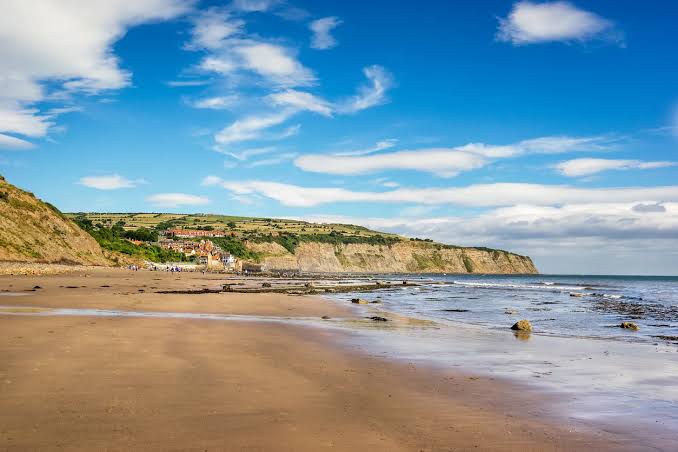
Robin Hood Bay’s cliffs are Jurassic-era, approximately 180 million years old, formed from the sedimentary layers that were once the floor of a shallow warm sea. The cliffs erode continuously into the North Sea, exposing new fossils regularly. Ammonites — the spiral-shelled cephalopods that are the most common Jurassic fossils — emerge from the cliff face regularly, and occasional rare specimens surface.
A 180-million-year-old creature spent 180 million years inside a Yorkshire cliff. The cliff eroded. Someone looked down at the right moment. That is what fossil discovery looks like.
THE BROADER CONTEXT
Robin Hood Bay is one of the UK’s most prolific fossil sites. The Yorkshire coast’s Jurassic strata have produced significant paleontological collections; the site’s accessibility — you can walk on the beach at low tide — has made it a location where amateur fossil hunters regularly find significant specimens alongside professional paleontologists.
| CONFIDENCE: HIGH | Robin Hood Bay fossil discovery and Jurassic geological context are from confirmed reporting and established Yorkshire geology documentation. |
SOURCES
▸ Confirmed reporting — Robin Hood Bay Yorkshire fossil discovery, August 31, 2026