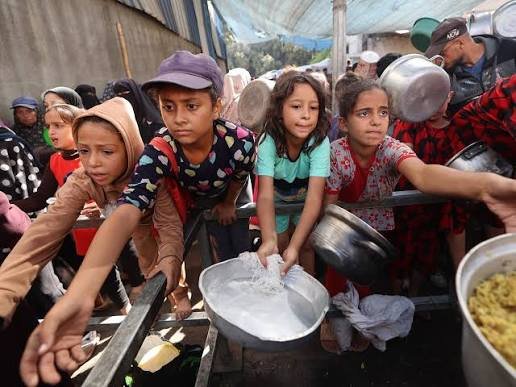
The World Food Programme has cut food aid for approximately 500,000 people in Gaza due to funding shortages, reducing the recipient population from 1.6 million to 1.1 million. The people removed from the aid rolls did not stop being hungry. The money stopped arriving. In a territory where famine conditions have been repeatedly documented, half a million people losing food aid is not a bureaucratic adjustment. It is a humanitarian crisis compounding an existing one.
BREAKING · GAZA · WFP · FOOD AID · HUMANITARIAN · CRISIS
GAZA / ROME — The World Food Programme announced it has been forced to cut food aid for approximately 500,000 people in Gaza due to funding shortages, reducing the number of people receiving WFP assistance from approximately 1.6 million to approximately 1.1 million, according to AFP via France 24. The reduction comes as famine conditions in Gaza have been documented by multiple international monitoring bodies, and as the humanitarian situation has been described by aid organizations as among the worst in the world.
WFP funding shortages are a function of donor contributions. The organization operates on voluntary contributions from member states and other donors, and when contributions fall short of operational requirements, the organization is forced to prioritize — which in practice means choosing which people to continue feeding and which people to remove from aid rolls. The 500,000 people cut from the Gaza program did not voluntarily leave the aid system. They were cut because donors did not provide the funds to continue feeding them.
Who Stopped Funding
WFP’s announcement did not attribute the funding shortfall to specific donors in the AFP via France 24 reporting. The United States has historically been the largest single donor to WFP operations. The Trump administration has conducted a broad review of U.S. foreign aid commitments, including humanitarian assistance, and has reduced funding to multiple UN agencies. Whether the Gaza-specific WFP funding shortfall is directly attributable to reduced U.S. contributions was not confirmed in available reporting, but the timing and the pattern of U.S. aid reductions under the current administration are the relevant context.
The funding shortfall comes as access to Gaza for aid deliveries has also been complicated by ongoing military operations, crossing restrictions, and the physical destruction of infrastructure that aid distribution depends on. The combination of reduced funding and delivery constraints means that the 1.1 million people still on WFP rolls may not be receiving the full intended rations even within the reduced program.
“We had to make impossible choices. Five hundred thousand people lost access to our program today not because they no longer needed it — they still need it desperately — but because we could not pay for it.” — WFP spokesperson, via AFP
Famine Documentation
Multiple international bodies — including the Integrated Food Security Phase Classification, the UN Office for the Coordination of Humanitarian Affairs, and several independent NGOs — have documented famine or near-famine conditions in parts of Gaza at various points since the conflict intensified. The WFP cuts make existing documentation of food insecurity worse and reduce the international community’s capacity to monitor and respond to deterioration on the ground.
WHAT HAPPENS NEXT
► WFP seeking emergency donor contributions to restore the 500,000 people removed from aid rolls.
► UN General Assembly expected to address the funding gap in scheduled sessions.
► U.S. aid contribution level to WFP Gaza operations subject to Congressional scrutiny.
► Famine monitoring organizations tracking the impact of the cuts on ground conditions.
► Aid access negotiations continuing — physical delivery constraints compound the funding shortage.
| CONFIDENCE: HIGH | WFP food aid cuts for 500,000 people confirmed by AFP via France 24. Reduction from 1.6M to 1.1M recipients confirmed. Funding shortage as cause confirmed by WFP. Donor attribution not confirmed in available reporting — flagged. U.S. aid reduction context from established reporting on administration aid policy. |
| Bias Check | ||
| Left-Lean | Center | Right-Lean |
| Frames cuts as a consequence of U.S. aid withdrawal under the Trump administration. | Reports the cuts, the numbers, and the funding cause as confirmed. | Limited right-leaning coverage; some argue aid efficiency and accountability rather than funding level. |
| Assessment | ONYX presents confirmed cuts and the funding context. U.S. donor attribution appropriately flagged as unconfirmed in available reporting. | |
SOURCES
► AFP via France 24 — WFP funding shortage, recipient reduction, and spokesperson statement